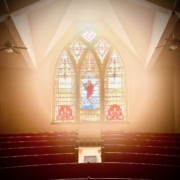
What is Prayer?

Prayer is not an act of belief, nor is it necessarily even an act of words.  It is an act of attention. 

There are many forms of prayer in every tradition throughout history. Anciently, prayer was a form of “communion,” meaning one actively opens to and engages with the benevolent force—that mystery of life, of aliveness, itself.

I’d propose that everyone, both the devout believer and the person of no belief or faith, would find something of value in experimenting with some prayer forms. After all, as one of my most dear teachers said, “All action is prayer.” I’ve come to see this is the case. Once one realizes one is inadvertently praying all the time, one is wise to start being a bit more intentional about it.

Prayer is a validated spiritual technology that has been used for millenia to heal people in every aspect of their being.   Let’s start on some basic, self-verifiable ground.

YOU ARE ALIVE

As a living being, you are in fact life—a cell in the body of all that lives, full of living cells.  You emerged from a living system that you can’t exist or survive without independently. There is a force inside you that keeps you alive. We understand some of its processes, but we don’t know what “life” is. We just know we wouldn’t be without it. 

Life clearly is observed to be a powerful force that creates, nurtures, sustains, and heals—life knows not only how to make new life, recycle old life, turn seeds into food for life, and create new beings and entire networks of living systems—it knows how to heal a broken bone, a broken mind, and even a broken heart.

Life is a strange, ubiquitous force in and around us that we take in with every breath. Yet somehow we manage to ignore and dismiss it.  We childishly assume it is “known” simply because we can observe and describe to some extent its cycles and processes.  We may think of life as separate from God in the traditional sense. But the mystery of the whole thing that is aliveness remains. We have no idea what it really is.


Consider the story of the big fish who swims by two little fish and asks,

How’s the water?

To which one little fish turns to his companion and asks,

What’s water?”  


PRAYER IS FEELING THE WATER

When we become still and start paying attention to it, to life—to its bigness and beauty—this is what I would call “prayer.”  It’s an intentional act of placing our focus on the mystery that surrounds and lies within us. It’s an honest question asked of it all, “What is this?

It’s the humility to set aside everything you’ve been told out the whole thing, and even your own thoughts and beliefs and past experiences with it, for a moment to ask and really want to listen to the answer, not just explain at it what you’ve decided it all is.

It’s obvious that our eyes are filled with what we look at.  Where our attention goes, that’s where our energy flows. Our attention and focus is our literal energy, our own life force. As we focus our own life force, our perception, to observe the whole life force within us and around us, life meets life in our awareness.

When we sit curiously with life, usually starting with our own breath of life, and we pay attention to it—life itself starts to grow to fill the experience.  It starts to look back at every turn. The mind wants to go crazy with this and talk about it and decide what it all means, but it’s critical to be the librarian here with the ever-present, “Sh.” This life force you are observing doesn’t work in words.

The kingdom of heaven is truly found within, and it doesn’t mind much how we label it with human words. It’s busy breathing you, sustaining you, and healing you, literally all the time.  To simply tune into this reality, to appreciate the quality and flavor of it, on purpose, opens us up to a whole new universe that we can directly experience right here, right now, in our own skin.

It moves beyond opinion and belief into a daily, lived interaction. And while it is subtle, it changes everything—we can start to actually feel the water we’re swimming in—that is swimming in us. And as life by nature heals, this act of attention on life starts becoming medicine, healing us without need of any direction on our part, simply because we are part of it.

OBSERVING LIFE VS. DIRECTING LIFE  

Life knows what our life needs without any asking, that’s observable and obvious.  Life will keep healing your cuts and regenerating your cells and making you food regardless of whether you appreciate it or “believe” in it, whatever that means.  It will keep doing its beautiful thing long after all of us end our sojourn here.

But weirdly, and unlike most other beings, humans have a unique form of consciousness that allows for self-destructiveness.  There is a logic and order to this, but that’s for another post.  It’s clear to everyone that humans are equipped with a will that allows us to ignore and fight against life, even against ourselves.  We’ve mostly been raised to sit in darkness at noonday and inanely pretend that it is we humans that wield life, and not compeltely obvious that it is the other way around.

So this type of prayer, or communing with the force that is life, is more an act of curiosity, cooperation, submission, observing, and allowing than accomplishing or directing anything.  It’s about putting down our fight and opinions about everything and actually looking around with a beginner’s mind for a minute.  We start being humble and curious observers who are interested in watching what’s actually happening rather than trying to make things happen. 

We suspect that perhaps there is something more interesting to discover and learn in this beyond chasing our desires and playing the culturally approved game of the day (which you might note arbitrarily changes every generation).

This style of prayer is about stopping to listen and observe it rather than constantly be stating our will into the wind.  And despite how most of us have been taught to pray—we can’t listen when we’re talking.

IS LIFE DIVINE?  IS LIFE GOD?   

Those with a directional faith in a specific higher power generally see the force of life as a manifestation of divine power.  That would depend on what “divine” means.

I find a practical definition of divinity is “a beneficient, powerful force that unconditionally creates, upholds, heals, and sustains living beings.” (Spoiler: creating, upholding, healing, and sustaining are together my working definition of loving.)

From that view, that would encompass our entire ecosystem, the complete network of life, including the earth which we spring from and which feeds us, the sun that sustains us with light, warmth, and growth, the atmosphere that breathes us alive, the water that makes all our cells functional, the fire/electricity in our nervous systems firing between our synapses. In fact, it is the entire cosmic clock that keeps us graciously in a gravitational cycle of push and pull that supports life rather than whirling us randomly out into space. It would also include the fifth element, or aether, the space between all of that which provides the container for it to exist.

Life isn’t the effect of these things nor can it be separated from these things, life is the entire combination of all these things—part and parcel with them—one, big, very busy verb.

SO AM I GOD? IS GOD SEPARATE FROM ME?

Another obvious and observable fact—we live within this living system.  You are one cell in its big, fat endless body. Feel into what that is like, you don’t need to just imagine it, it’s happening here. We are parts and extensions of it, not foreigners to it.  Our obsession with separateness doesn’t even make any scientific sense–that’s not how the natural world works at all. Nothing can exist outside of the system it sprang from.  

As Watts explained, paraphrasing here: we didn’t come into the Earth, we came out of it.  Just as an apple tree “apples,” the earth “peoples.”

Even if you believe your consciousness came from another dimension, planet, pre-existence, or out of nothing (not scientifically a thing), your consciousness now exists in a living form that springs from a living system. Your consciousness has been trained to think it is separate from its system. That doesn’t mean that your system isn’t conscious of you, or that the system itself isn’t in fact the root of your consciousness, but that’s for you to explore for yourself.

This is why all of our ancestors respected all of these forces as divine—earth, air, water, even fire, and all the space between—these are concrete, material observable forces that clearly exist both within and without each of us, and we can’t live without the entire combination. No rational person can argue this, as we all can observe it with our own eyes.

From a spiritual standpoint, this is also why contemplatives from the gnostic corner of every world religion report the same interconnected, all-one experience when they take this inner path to the whole, as do folks today spending time with plant teachers. Life will indeed talk to you if you’re interested in listening, and while your experience will be your own, it will still likely follow a general trajectory laid down by elders across a wide range of traditions worldwide for thousands of years that all correlate.

Neglecting all of the documentation on the topic that we now have translated from even the most remote corners of the world is just another example of outdated bias interfering with clinical inquiry. We’ve only had all of it in hand for a decade or so, but it’s all right there. Regardless, the good news is this can be a fully DIY project, no outside sources or middle men needed.

It seems rather silly that such an appreciation of the web of life as one great whole, each of us being a pearl in Indra’s Net reflecting back the whole from our perspective, is deemed spiritualistic or irrational. It’s biology-based, observable, and rather practical, from an ecological point of view. 

THE PART CAN EXPERIENCE THE WHOLE

And even better, as parts of this thing, we can turn our attention to it.  We can tune into the whole, be the fish feeling the ocean.

In doing this, we discover there is a radio station, so to speak, that is always playing.  We get to hear that music, we get to tune and atune our instrument. If we choose to pay attention to it, to set aside the external game and playing our little part for just a moment, we get to physically and directly experience the magic of the whole.  As we do this, belief, even knowledge, becomes irrelevant. God is no longer an idea, a goal, or a creed—it becomes a direct, daily experience.

BIG DEAL AND NO BIG DEAL

When one begins to really take the time to feel into what it is to be embodied in this one great whole—a whole new world emerges.

The big beautiful mystery really is a big deal, a big discovery that has always been just right there.  Sometimes when tuning in you can get just a taste that leaves you full of amazement and praise and true bliss for days, and the devotion and praise spontaneously wells up for the big beautiful thing we live within that is aliveness.  The ocean of it is so vast.

But, also it’s not a big deal.  It really is a simple practice of attention, of tuning in.

Sure, there are amazing moments on the inner path.  But mostly it is quiet, awkward, slow, very personal, and hard to communicate.  Words fail most of the time.  At first you question your sanity, later you wonder how you ever didn’t see it.

In a way, it really doesn’t feel that different from sitting by the actual ocean.  Yes it is overwhelmingly huge, essential to all life, dangerous, vast, ancient, terrifying, and full of living beings, death, secrets, and mysteries.  It is always beautiful.

But sometimes you can still sit down in the sand and feel sad.

WHERE IS THE EDGE OF ALL THAT IS?

So yes, I take a pretty expansive view of God.  I have directly experienced what I would call the divine in many forms.  I have found it within myself and around me.  In moments, I have felt it in all forms, in every face, in all and in the nothingness.

For me, there is no edge of what I would call divine.  It is all one big magical mysterious thing that somehow I get to experience being a part of, yet also directly and personally interact with in an infinite number of forms.  I do rely on specific forms of the divine when I turn my attention toward it to speed my tuning in because they hold a lot of power for me.  But I also know that even these are gateways, one face of the thing that can never encompass the whole of it.

Plenty of people with and without formal religion take this view.  Most people from any tradition have moments where they marvel at the beauty and complexity of the force that makes the earth and everything on it alive.  When I talk about prayer here, I am speaking of a very safe space beyond beliefs where we women of most traditions and faiths—or no specific faith at all—can appreciate and marvel together.

Simply consider spending some time being with and listening to the force behind life, the sound it’s making in your lungs, the way the wind feels on the skin. Consider that there may be something there to listen to, butit may take a bit to detox from constant overstimulation and distraction, which dulls the senses.

I had a friend in a faith transition say, “I just haven’t figured out the whole God thing yet.” And of coure my response was, “How weird that your 3lb cranial meat bag hasn’t yet been able to wrap itself around the Infinite.”

Let’s have some humility here and quit drawing fences and putting the infinite mystery of life in made-up human boxes that have nothing to do with reality. As the scriptures say, the divine thought process is not our thought process, the divine ways are not human ways, we can’t even fathom the scale of what life is, let alone grasp the omnipresence of its force. However, we can wonder at life, open to it, and allow ourselves to be fueled by it.

PRAYER is an inner cultivation our own inner power to connect to the whole of life to heal and regenerate ourselves where we are at right now.  It’s an act of attention—resting the mind in grace, creating an inner healing place.

What is Contemplative Prayer?

What is Contemplative Prayer?

What is Contemplative Prayer?

Contemplative prayer is like when you open your mouth and sit back at the dentist.  You try to relax, you understand that something is being done to you by a considerate, skilled being that understands your needs better than you do, in that case, your dental needs.  Opening and inviting in silence allows life to do the same kind of fixing and healing. It’s a kind that we don’t fully understand with the intellect, but can directly experience and sense on the inside and in your heart.

One of my beloved yoga teachers gave the clearest roadmap to Contemplative Prayer, which in my view is Zazen from the Zen tradition with the only addition of a heartfelt “Come, Lord” before beginning.

Connect

The first step is to sit back, hold still and “open the mouth,” figuratively.  This means we open the heart, mind, body, soul—everything the divine has blessed us with—to the building up of our own temple as an instrument for the upliftment of all.  We do trust that the power outlet is there to plug into, but that is all the faith that is required. We just sit and expect nothing and feel the holy breath going in and out, knowing it is doing the needed work, whatever it is. We may have our first experiences physically feeling the energy flow at some point.  Tree breathing is perfect for this.

This grows our inner trust and allows us to…

Align

Still quiet, still submissive, we continue to wait upon the divine for a period in this way every day, trusting our own holy breath is doing the work.  But in our off-cushion hours, we start looking more closely at our daily interactions. We start feeling like there is a little more space between an outside stimulus and our natural reaction where we have more of a a chance to pause and consider our response. This stretching of the time between an irritation and our reaction is a natural outcome of being still some each day. That sitting makes us more sensitive to our inner workings so we have a chance to do differently and it only takes a few weeks to start seeing the gap where there really is a choice. Otherwise we think any reaction was the only choice—the rightful response, how could anything else even happen?

We also start doing the same thing we do on the cushion more often when doing dishes, weeding, driving, or just going about life. We intentionally return our attention to the holy breath of life. We re-align more even when not on the cushion. This is called “effort, or “trying.” At first this can be exhausting, tedious, and can sometimes seem like endless weed-pulling to dump the endless barage of judgments and thoughts we have collected through life that clog our instrument. They do flush themselves out, I promise. It just takes time each day to sit with them and practice coming back to the breath when the mind runs off. No shame, no blame, coming back (turning back toward, or returning the focus, another shame-free definition of “repentance”) is simply a basic task you don’t get emotionally attached to. Again, you don’t look for the fruit or benefit, waiting for a cookie for all this, thinking about the future, or stewing on the past all will keep us from directly experiencing the full force of the divine flowing through right here and now. And with time, you will feel subtler and subtler sensations of life in your body.

But after all this trying and constant, submissive practice, we start noticing more times of…

Flow

This is a spontaneous act of co-creation that begins with this uplifted vision, an opening to divinity, and an allowing that we must offer our time, talents, and abilities, but cannot seek to control how they are used.  Rather, we trust entirely in the benevolent force we have trained to embody.  We are less obsessed with our own weaknesses and grading our own behavior and can move more naturally. We open to flow as a choice, and kind of trust fall. It is not a belief system, it is an act of faith. You do not expect or look to fully understand what is happening or why, no one needs to report to you or account for what is going on. You do not expect gratification from the fruits of any of your labors.  It may bear fruit in a thousand years for all you care, your enjoyment comes from feeling that divine flow in the present moment, and trusting where it leads you.

Flow comes when you trust that because you have asked to be an instrument, you choose to assume that you have already and are currently receiving. This is because you “know in whom you have trusted.” Actively choosing to live in divine flow is an act of active, present, daily hope for the highest good for all life, peace on earth, universal harmony and goodwill. Where and when else can you be of benefit in the world besides right here and now? The energy you invite through you is real, you can feel it yourself..

Contemplative prayer can be a very healing practice for people who aren’t sure what divinity is or who don’t have any specific belief system or faith tradition to work from. While the higher power or life force is being called upon, after that it is mainly a very intense form of listening. You listen with trust that your dusty inner corners, hangups, resentments, false ideas, etc., are being swept by the benevolent force that is life.

What is the Inner Path?

All of the traditions studied and presented here essentially share one assumption—that while humans enjoy the free will to pursue their desires and avoid the things they don’t want as they wish—this exercise will ultimately end in a realization that no external person, item, or situation will deeply satisfy in a permanent way. The moment we gain one desire or rid ourselves of a grievance, our mind shifts to the next, and disatisfaction finds its way back in.  This running from and running toward different external circumstances, ever bouncing between pleasure, pain, craving, and avoidance, will always result in disappointed exhaustion.  This is amplified by our current time and culture centered on pleasure, greed, ignorance, and aggression.

While very unpleasant, this realization is simply part of the human education and maturity process. Individually, it often looks like a mid-life crisis, breakdown, a major depressive state, or irratic behavior.  The global events of the past few years have also hastened this process en masse—a difficult but much-needed lesson to prepare us for the decade ahead of us.

“The Kingdom of Heaven is Within.”

Wise and authentic sages, saints, teachers, and inspired fellow travelers always point others to the “still, small voice” within, and offer instruction on how to more deeply listen, connect, align, and flow from within this space to beautify and enrich our human experience, and uplift humanity as a whole. 

The red flag, of course, is when a spiritual leader points to themselves, or sells access to our innate human abilities for money.  Yet, it is human nature over time to create rituals and traditions that focus more on “the hand pointing at the moon” rather than the moon itself.  It is also the nature of most humans, once a little authority is gained, to fall prey to the temptation to abuse that power and turn the inner path into a money-making scheme, a power/control trip, or way to fill their own unresolved desires. 

This is simply the reality we live in, yet it demonstrates the dire need for each of us to develop a strong connection to our own inner communication system—to directly experience “the moon” itself.

It’s important to remember that even when we place our trust in external people, things, circumstances, systems, organizations, beliefs, and ideas—including our ideas about the divine—we forget that the person placing that trust must also be investigated, clarified, and trusted first for that externally placed trust to have a solid foundation.  Note that when we do directly meet and experience ourselves, the divine, even another person—that experience happens entirely within ourselves.  There is no space beyond you where your connection or experience dwells. While it seems obvious and common sense, our cultural training is otherwise.

How to Talk About the Wordless

The inner path leads us to a new experience we can’t simply put into words.  The inner experience of childbirth, a moment of deep connection with nature, music or art, a “unity experience” of sudden, divine contact, an NDE—these can very rarely be transmitted directly to another with words alone. We taste these experiences directly—just like we taste salt and know it is salty. This is an inner understanding that can’t be shared in its original form with anyone–only expressed symbolically in hope they can relate based on their own experiences.

This is the oil of the five wise virgins of the New Testament—gnosis—or inner direct knowing of who and what we truly are when our thinking, chattering mind is quiet.  These were the ones who were ready at the darkest hour. We will need nothing less.

We discover in these moments something we can’t fully articulate to others, yet we are entirely changed by it and our future lives are fully informed by it.  We may call it a lot of different names based on our traditions, but when experienced directly, we learn that it is actually wordless, deathless, nondenominational, indestructable, eternal. Somehow it is mind-bogglingly interconnected with all, intimately personal, yet universally accessible. In the end, we can’t explain the why or how of our deepest internal expriences in the language we currently have, or present it properly for external validation that it is “real.”  This experience is more directly real to us than all our words, but it’s simply beyond our limited human constructs to effectively condense the most complex, rich human experiences into mouth noises or characters on a page.

This is why art is so essential in this process–it can convey experiences in ways conversation cannot.

Secret Sauce or Open to All?

If we have a direct experience connecting with our inner reality, we may then naturally assume our tradition was its source, that it validates the superiority or veracity of our tradition. Or, that access to such an experience is exclusive to our own tradition. However, the pointing hand did not make the moon.

Even a cursory study will reveal that this is a common human experience across all human traditions—both spiritual and secular. We can cultivate gratitude toward our tradition for laying the path that brought us forth. This gratitude can be extended and enjoyed even when it was our frustration or disenchantment with our tradition that drove the healing crisis.

Thankfully, wise men and women over thousands of years from around the world have mapped out the general commonalities of this vast human inner landscape. Through them, we can discover that however perfectly personal these experiences are to us, they also generally fall within a universal framework of inner maturity and human progression, and actually fuel the collective progress of humanity. Bliss, waves of felt energy, altered states, divine visions, sleeping and waking dreams, hellscapes and dark nights of the soul—we learn are not in fact destinations in and of themselves at all. They too are natural, common milestones on our inner journey that must be thoroughly digested and then released—the same as any external desire.

This actually can be quite a relief to learn that we humans have collected a tremendous amount of researched data about the inner landscape for aeons, and live in a time where we can access and correlate all of it to find the integrated center. Especially if we are raised in a tradition that didn’t provide a context for such experiences, or if the original framework itself is blown away by the experience, we have vast resources to draw upon. I’m worried that too many are feeling isolated or fearing that they are going crazy, when really they are entering a new stage of their own development that is actually very well understood across many human traditions throughout history. While words, cultural imagery, and some aspects differ, the central picture is shockingly consistent.

So, why not benefit from thousands of years of painstaking human effort to preserve these tools for the sake of human harmony and actualization? Can we really tell ourselves that we’re at the pinnacle of human wisdom, even as we stand—disconnected and lost—on the brink of our own self-destruction?

Words are Not the Thing

Just as my telling you with words how deeply I love my children does not place within you that same, direct experience of activated, felt love for my children—we are all confined by the limits of our language and the window of our past experiences.  It’s very hard to convey our inner world with each other, but remember, this was the origin and purpose of language itself—to be able to share our inner experience. 

And strangely, our exchange of words and arguments over what various words mean in the outer world has now somehow begun to take top priority over our actual, direct experience—the reality of our inner human journey through the world.  As a result, we are now raising entire generations who are operating entirely in the world of words and symbols, living primarily in reaction to the world presented on their rectangles. They are disconnected from the unconditionally sustaining forces that literally surround and support them. It is rare to feel our feet on the earth, to notice the air breathing our lungs, to actively receive the sun’s support of every aspect of our existence. We stand, actually experiencing the daily embrace of these higher powers—still trapped in words and ideas and beliefs.

I’m reminded of the Tower of Babel and wonder sometimes if this is what it looks like to have our language “confounded” to the point that we can’t understand each other anymore. It seems to be organically taking place in our world as we speak.

Does the Inner Path Require Belief?

A while ago one of my sons said he didn’t think he believed in God. I smiled and said, “What is there to believe in? You’re standing on her, she feeds you, and you’re literally made out of her. She doesn’t care what you believe.”

I took the liberty of speaking for her, because I’m an underappreciated mom, too. He actually raised his eyebrows thoughtfully and nodded a bit. Touché.

But in all seriousness, what is a “God” if not a higher power—a force beyond our own efforts—that unconditionally and daily provides for our existence?  

Because we have become stuck in the world of our mental constructs, we are increasingly cut off from our own actual, direct experience of connection—connecting with our own aliveness and the wondrous ecosystem of which we are obviously a part. We have instead trapped ourselves instead inside ideas, thoughts and words about life—and as a result, most of us have become imprisoned in our own heads, and the talking doesn’t let up inside even if no one is talking outside. Talking IS our life.

It seems we are spinning in outdated assumptions of separateness with no foundation in our own actual, observable world beyond the rectangles.

As one of my dear teachers often says, “You cannot escape from a prison made of thoughts using thought.”

Strangely, this pervasive, disconnected view is often seen as rational and firmly non-theistic—yet it completely contradicts the evident interwoven systems and our growing understanding of observable biology, physics, how ecosystems work, or even common sense.

On the other side, many theistic traditions have also cut themselves off from the apparent physical creation they interact with daily—seeing it as dead, separate, or corrupt—rather than powerful forces which enable us to directly experience constant divine nurturing.

Even if we hold to the idea of an anthropomorphized, parental God—or divine parents, as with my tradition—how can we not see these powers as divinely sustained instruments?

In my view, the only belief needed is the belief that there is something here to explore—that perhaps our little 3 lb. meat bag brains maybe haven’t totally figured out the infinite and don’t have it all nailed down tidily. Believe in a little humility. Believe in curiousity. Believe in being aware and observing. Believe in wonder and appreciating what is, rather than declaring what we have concluded that it is.

Even when we have a rich tradition full of answers, there is so much more to learn! When we deeply listen inside and truly observe, when we learn to silence our inner and outer chatter—we learn. It may take a minute to resensitize ourselves, as long-term loudness and distraction takes a toll on our ability to be still and listen.

But as our elementary teachers told us, “You can’t hear when you’re talking.” So my advice is to set aside words for a moment—even the words of belief—and explore the power of silence.

Be still and know.

If It’s Universal, Why Does the Inner Path Require Training?

Unless children are being instructed in a specific religious tradition, rarely are western kids trained in looking inward, so they are left ever chasing the outward.  If they are raised within a tradition, often they are taught to view the inner voice as suspect unless it aligns nicely with the tradition’s teachings about what the inner experience should look and feel like. 

Quickly, entire generations can forget that words were only ever symbols of the actual direct human experience. Once again, even religious or spiritual training often leads them into a purely symbolic, virtual world of ideas about life.  Ironically, the child’s actual, inner human experience eventually is discredited or dismissed as “unreal” by their own mind—simply because it cannot be conveyed through the words and ideas they’ve been provided.

Culturally, this leaves us cut off from our own inner experience entirely.  We never develop the navigation skills to understand our inner landscape, and develop our sensitivity and self trust so we act wisely in the world. We just react and are acted upon.

This is a travesty, because the human instrument is in truth a Stradivarius, a Steinway—and rather than teaching children how to tune in, learn to play their instrument, and allow life to play through them—they come to spend their human life as a room ornament, appreciated for appearance only, never aware of the music they could make.

So, skilled inner teachers often “point” with parables, metaphors, stories, and through art simply because the subject matter is beyond our limited thought capacity. They will often avoid multiplying words which can get students stuck in their heads—analyzing, compartmentalizing, separating—which block our ability to directly experience the whole of which we are a part. 

This is also why they often use the felt experience of the body (somatic experience) such as the more familiar body yogas, because they can help the student directly encounter these forces within themselves and circumvent the ever-commenting chatter of our minds.  

Understanding the human as receiver and transmitter.

This point is self verifiable.  We are equipped with five senses and a mind to receive and perceive.  We are also equipped with the ability to emit vibration, thought, voice, and action to transmit outward.   

When we don’t train our senses and mind, we receive basically whatever comes along, whatever we were trained to look at growing up, or our random desires. 

When we don’t understand that we are literally changing our environment with what we are emitting, we can haphazardly transmit the same habits and patterns that reinforce whatever we already expected and were trained to transmit.

Either way, we are creating. If you’re alive, you’re transmitting and receiving, and there is no neutral. So why not be more mindful of what we send and receive? Be the change we want to see in the world? What if it really isn’t that hard?

Maturity, free will, consciousness—these words are just about becoming aware of what we are receiving and transmitting to ensure it truly aligns with our values.

What do we wish to be filled with and fueled by? What do we wish to send into the world?   

In a world awash in chaos and negativity and powerlessness, avoiding our inner work simply makes us an accidental relay station that amplifies the chaos, negativity, and powerlessness we take in daily. We fill up with shock and horror at what we witness on the rectangles. We then call this “being informed” about the “real world,” even as we neglect to notice the actual real world of earth, sky, sun, moon, plants, humans and animals in our actual circle of influence, and, at the center of it all—our own inner landscape.

We can instead choose to be a conscious instrument—taking in and sending out wisely and lovingly—amplifying the most positive vision we can muster for humanity.   

On the surface, this seems irrationally idealistic. In practice, you directly witness an evolution over time as you train in stillness, sensitivity and awareness.

This is the inner path.

Leveraging Your Traditions vs. Rejecting Them

I often argue that all of us are members of many “cults.”  CULTure is simply a human way of being that demands compliance to receive social benefits.  Our religious, political, and economic systems, and many families all very much operate like cults—conformity is psychologically enforced, nonconformity, penalized.

But this doesn’t mean we throw out our traditions or dispense with our favored cults—we just have the awareness to realize our membership in them. It is only when we assume any cult’s superiority or perfection that we get stuck.

So we must start by recognizing that for us to find any honest free will, we have to do a little unpacking of our programming.

Our conditioning, or traditions, generally both help and hold us back. They provide solid ground for us to grow and learn and become ourselves in the world.  They create order where there is chaos. Our time, place, family and traditions become the lenses we use to see the world.

But as we mature, we begin to expand our ability to view the world through a wider range of lenses, and if we can avoid falling into the trap of calling any lens wrong or right, we gain more space to live more fully and wholly.

We Humans are Extremely Adaptable! 

A human baby born in rural China, wealthy Southern California, the jungle of the Amazon, the Siberian tundra—any corner of the globe—will speak the language in two years, comply with the mores and rules by five, and believe their system is the one, only and best way to be a human until their frontal lobe fully develops in their third and fourth decades of life (unless they’re never exposed to any other systems).

While there is almost always a corner of every human tradition that points us to this inner system and supports our connection to it, unfortunately, this is usually the quietest, most neglected corner.  It’s much more common for us to get pulled into focusing mainly on the external priorities our traditions demand of us–the daily grind, the bills, appearances, and the fires needing to be put out.  Our attention is drawn outward by the more negative, noisy, or controlling elements of our traditions.

This is the shadow side of our conditioning and can drain our life force.

This pattern causes us to either be unaware of, or neglect learning how to, operate and regulate our inner coherence system. Without it, we are further vulnerable to the chaotic, conflicting external signals and we remain oblivious to the immense inner resources we all have on hand.  Learning to use and master our inner systems actually gives us the clarity and energy to meet the daily demands of our external world more easily, whatever they may be.

Embracing Our Conditioning and the World Beyond It

The good news is, we don’t need to (nor can we) fully wipe clean our hard drives and be a perfectly clear vessel for reality. Simply understanding that all humans see through multiple lenses instilled from their time, place, parents, ancestors, country, political, religious, and economic views gives us the humility to always be learning and non-judgmental approach.

When we gain some self-perspective, we can find the peace of the “middle way,” where we can cherish, appreciate, and work within our traditions—or forgive and move on when they hurt more than help. We can take helpful things from new perspectives that widen our view without needing to condemn anything or anyone.

Development Doesn’t Stop at Adulthood

Human beings can continually mature and gain wider and wider perspective. Understanding our conditioning and taking “the step backward” to look at our thinking and why we think the way we do simply allows us to keep growing up.

Aggregators to the Rescue!

A revolution in human consciousness is happening right now—can you feel it?

We live in a very exciting time of change, and some wonderfully illuminating discoveries are happening on the inner landscape of humanity right now that will be of greater benefit to future generations and the planet. While the noisy and heartbreaking upheaval and divisions pull most of our attention and so many of us feel powerless, a new, more unified paradigm is naturally emerging in parallel as an organic result of the information era. This paradigm offers an alternative path to fear and chaos and an approach that allows each of us to regain our personal power to bless ourselves and those around us, and humanity itself, with a brighter future even now.

While we all have days where we feel we are standing at the brink of human destruction, I’d like to invite you to try out a thought experiment: consider for a moment that you are actually part of a pioneer generation, and that future children will be taught about this historic consciousness shift you are currently experiencing. Contemplate the possibility that there is a way to ride this wild shift with less daily stress, fear, and confusion, and a more positive vision for the Earth’s future based on practical experience.

From “Information Overload” to “Aggregation Download”

With our heads down in the daily worries and headlines, its easy to miss a bigger emerging picture—we now have a flood of fascinating information we have never had about ourselves as a collective group of humans. The exponential rise in information for the past three decades has given rise to an unprecedented level of correlation across cultures, place, and time. Self-driven, curious students across a wide range of disciplines are diving deep into niche subjects of interest then emerging to share their aggregated information and collaborate and integrate with others doing the same thing.

The integration of all this information between aggregators is creating an interesting perspective on the human race increasingly being validated across many areas of study. Groups of millions around the world are right this moment pioneering positive action based on a new frontier of information about consciousness—what we are, how our inner systems work, what we’re capable of, and how we can together take a more positive path from the inside.

This unified paradigm aligns a diverse range of perspectives in a simplified centerpoint beyond beliefs or opinions. This perspective allows folks of faith to strengthen and act on that faith, while providing secular folks with a practical way forward to uplift the world and strengthen their inner trust.

A Scientist, a Psychonaut, and a Meditation Master Walked into a Bar . . .

On the academic side, those studying the external human landscape—historians, anthropologists, physicists, biologists, and theologians, among many other fields—are now actively and excitedly correllating intersecting data. Once-solid boundaries are dissolving to allow the discovery of common cosmologies that affirm one another.  Renowned biologist Rupert Sheldrake’s groundbreaking research explains why once one human breaks any record—such as the 4 minute mile—more humans suddenly start being able to match it as well. A collective database we all have access to, likely based on frequency (like a radio station), has been discovered. Brilliant analysis on this idea of collective consciounsess and resonance theory as a viable biological reality rather than simply fluffy esotericism, to me, is a front-page worthy revelation. It would be earth-changing if widely understood. (This wonderful Scientific American article is a wonderful place to start: “The Hippies Were Right: Everything is Vibrations, Man.”)

Meanwhile, students on the inner path exploring the internal human landscape have also been aggregating and discovering a shared experience. Meditators, contemplatives, devotees, visionaries, lovers of transcendence through art, nature, music, connection, beauty, etc. are finding common ground with psychonauts who explore consciousness with mind altering plants and hallucinogenic experiences. Both of these are seeing similar experiences in the staggering number of now well-documented death experience stories now skyrocketing—primarily due to our amazing advances in resuscitative medicine.

Then, amazingly, a vast global library of ancient traditional knowledge on human consciousness suddenly burst forth upon the collective in just the past three years—an unexpected result of the COVID lockdowns. To my utter shock and joy, vast amounts of highly specific information about ancient indigenous, shamanic, and theistic and non-theistic global religious traditions has also been pouring into the world from every corner of the Earth. Lineage holders are assigned people, often within ancestral cultures or monastic orders, tasked with protecting and passing down their wisdom traditions through systematic, long-term, in-person training for years and even whole lifetimes. Teachings are often kept secret to protect them from dilution, distortion, and misuse over time, with the purpose of keeping them wholly intact for millenia to benefit future humanity.

These ancient roadmaps from every continent overlap and integrate in such a beautiful way with both the inner and outer research being done.

As someone who has spent a great deal of time studying all of these areas, I see the map of shared human consciousness becoming clearer, more integrated and statistically significant. I would argue, obvious. From my view, scientific discoveries about our smallest forms of measurable reality and the behavior of our universe are validating cosmologies described in ancient root texts from every continent and the personal experiences of millions now on the planet.

The Big Dharma Firesale . . .

Dharma is another word for reality, wisdom, the gospel, the truth of the whole of what is. It’s mindblowing that we now have advanced courses offered on Zoom (with translation!) taught by elders and lineage holders from many far-flung and typically highly closed traditions around the world. The new discoveries in just the past decade are astonishing as different types of aggregators are now being aggregated themselves—allowing a curious student to sit down and understand the global patterns emerging between the most remote and secluded groups within a single book.

Often, two reasons are stated for why these reclusive wisdom elders across the world are suddenly streaming online advanced information, tools, and practices that have been kept safe for literally thousands of years, as for many of them public sharing in this way would be considered unthinkable and a desecration in earlier times.

  • First, because they felt the knowledge and tools were so greatly needed in these dark days where so much of our self-understanding as humans has been lost, and that humans need knowledge of and access to their innate navigation tools. (In an incredible number of these cases, just like winter follows autumn, they already knew this part of the cycle was coming, or stated they were told in dream or vision to share it.)
  • Second, many lineage holders currently see a dire threat of their own destruction and feel that the knowledge must stay available to future generations in some form, even if not kept perfectly intact by themselves. Sharing in this way is justified simply to protect the information from total loss.

I cannot overemphasize what this means to humanity. The value in deeply studying just any one of these ancient traditions is immense. But to be able to deeply “download” the essence of so many of the Earth’s diverse traditions through a passionate, curious group of aggregators is something that no human before has ever had access to.

Understanding the bigger picture coming forward makes an actual, practical, dramatic shift in humanity actually possible—it shows the way out of our current predicament. It truly lays the logical, practical groundwork for universal joy and peace. In studying this vast array of human history, one also realizes the staggering hubris of our current myopic society—which sees itself ever at the summit of human understanding, even as we increasingly discover lost knowledge and technologies we can’t now even begin to explain within the limits of our current knowledge and measurement tools.

What a privilege it has been to drink from a firehose of wisdom from these highly developed humans now sharing their long-held ancestral information about consciounsess, the past, and the future of humanity. A study of as many of these ways of perceiving as possible allows a person to step into every number on the clock and look back at the center, we broaden our perception of the whole. We become wiser.

Remembering Who We Are

In so many ways we have lost almost every sense of what we are, what a human is, and how to operate this vehicle we all operate. It is important to understand the limitations of our given system of language and perception—a language does not have words for things its speakers do not know exist. To study other cultures and traditions is to have entirely new possibilities opened to us. To be aware of the edges of our awareness is to open up to a much larger universe. Otherwise, we get stuck in the idea that the borders of our thinking are the borders of the universe.

Consider a simple example. Did you know that what we consider the “scientific” five senses in the west are actually a cultural construct, not a biological one? Much of the east considers six, and count consciousness among the Western five. Yet other traditions bring in several others. For instance, the Anlo culture in Africa teaches nine senses, one of which is balance–the ability to balance things both physically (as you often see in photos with even small children carrying large items atop their head hands free), psychologically, and over the whole of their life.

To study other systems doesn’t need to be perceived as a challenge to our own teachings or ideas. Instead it can open our eyes to a new way of seeing more of our world.

Aggregating Unity: The Trend That Isn’t Trending on Twitter

Well to be honest, unity consciousness is kind of trending on Twitter.

Still, perhaps you may not be aware that there has been a tremendous uptick of spontaneous “unity experiences” reported across the globe by more and more people of all ages, genders, traditions, and beliefs. This is also fueling more aggregation and conversation online, as they seek for understanding and context for their experience and find it is actually a very common human experience mapped out, cultivated, and mastered by humans for thousands of years. It can happen listening to music, in prayer, being outside or with animals, or completely randomly for no apparent reason.

It can be disorienting. It can bring a sense of bliss, an end to fear, a sense of truly being a cell within God, of seeing all beings as one beloved, interconnected being that encompasses everything, and yet that everything is mirrored within every component of it, an Indra’s Net. Without a friend on the inner path, the dissonance with this experience and daily regular life can over time lead to confusion, self-isolation, faith transition, and depression. Thankfully there are ancient texts that can walk you right through these stages and help you integrate it (e.g., Dongshan’s Five Ranks), but I fear that many westerners who encounter it suffer needlessly and can feel crazy and alone.

Far from being isolated in the privacy of our own inner “imaginary world,” students are coming together to find a tsunami of evidence that they are navigating a similar internal landscape and stages of awareness.

Navigating the Inner Landscape: The Body is Your Key

My area of aggregation and study centers around esoteric human traditions and inner path schools that train students how to healing both oneself on all levels, and healing the Human as a whole. Having studied and compared and combined a wide range of tools and methods, this line of interest is powerful and self-verifiable to me. That’s mainly what this repository is for.

Across the traditions, the student is trained on how to use the human body as an instrument, much like a musical instrument. The student is trained in how to:

  1. quiet the mind (find calm and stability)
  2. focus the attention
  3. develop nondual awareness
  4. generate universal compassion, and
  5. manipulate the vibration and current flow of the body’s electromagnetic field to acheive certain experiences, states, as well as to heal the self and others
  6. discover the true nature of the self, reality, and/or connect with the divine whole.

As with Qi Gong or Kung Fu and all of the martial and mental arts of Asia, this is a matter of training and practice, not belief or ideas. The inner work is a work done from within the body, using the body. Simply by being an aggregator, I always run the risk of oversimplification. But the beauty is that anyone can jump down their specific rabbit hole of interest and validation if they want to know more. If there is any specific topic I talk about that you want to read more on, I’m happy to point you to my favorite source documents.

From Mystical to Practical

Remember when doctors refused to wash their hands because they were “rational” materialists? Remember how people who believed in tiny little things too small to see that caused illness were irrational mystic witches?

Here’s some pretty straight science—Humans perceive <1% of the spectrums of vibration that humans can measure with the human tools they’ve developed thus far, which they concede may only be 1% of the actual spectrum of what’s out there to be perceived.  Researchers continually expand the limits of the known spectrum.

Put simply, we are completely interconnected and interacting with each other and our wider universal environment all the time on subtle levels. And this can be recognized and worked with to grow our potential.  

When we meditate or pray or be still, we let the snow globe settle, and we get more sensitive to other information. In fact, we expand our sensory range as we do this. Just like a person without sight hears better (and even can learn to echolocate!) silence, listening, training and practice can self-verifiably enhance your standard human ability.

From Inside to Outside

The most powerful way we interact with each other through these more subtle wavelengths is through our thoughts—and now we can magnetically measure our thoughts several inches away from the skull, just as we used to with electrical measurements only in the skull previously.  We know we are receivers, always gathering data through our senses, and we know we are transmitters when we put words and actions out into the world, but yep, even those thoughts themselves are transmitting farther, and with more effect, that we ever thought was the case. 

It’s self verifiable that our thoughts are impacted by other’s thoughts.  We feel this just in our interpersonal relationships.  Being around negative people impacts our own thoughts negatively.  It’s infectious.  I’ve read of some cultures where negative people are shunned like a leper–it’s seen as an infectious poison that removes joy and gratitude. And the reverse is true.  The increasing evidence toward resonance theory demonstrates that it is possible for even a minority of humans (an estimated 2-3%) to intentionally uplift the whole of us substantially through focused attention and consciousness work alone.

Judge Not

Judge Not, Fear Not, Love One Another, Forgive All

Whether or not you are a follower of the being who taught these fundamental, oft-neglected principles, they lie at the heart of most spiritual teachings.

The good news is, when one finally sees clearly into the nature of cause and effect, judgment of our fellowman disappears entirely.

Once we observe that all actions are merely a result of being caught in the delusion of our preferences, demands and desires—we really can drop seeing an individual as “bad” or “good,” but just another dear face of our fundamental human condition.  

We can really become free of our resistance toward others, and yes, we are the ones that become free when we release others from our judgment!

When we drop judgments, we don’t desire to rescue or “fix” anyone anymore.  We get off our high horse and respect our fellow travelers as big boys and girls who are learning just as we are.

We do hope they minimize the unnecessary suffering they both experience themselves and cause others in their process. But in the end, the only accurate judge is one that has ALL the facts. None of us have this, so ALL human judgment is blind and false.

Put simply, being human is hard.  For you.  For me.  For “them.”  

Our culture is one of swift, hasty, and loud judgment, and we’d benefit greatly by re-instituting a few time-tested ideas like “judge not” and “you cannot understand someone without walking a mile in his moccasins.”

Discernment, or the ability to determine the best course of action or decide whether to trust in something, is a personal matter.  This is called “our business,” and we should all keep to minding only that. 

When catching yourself worrying about another’s business, just realize how little you really know about what they’ve been through and all the causes and effects that brought them to this point, including how they were taught to think from before they ever had a say.

Think about the times you’ve mistepped or hurt another, or been misunderstood. Think about the times you’ve been a “bad person” and sent ugly, terrible thoughts, words, or actions into the world.

Think about the times you’ve been a “good person” and sent loving, forgiving thoughts, words, or actions into the world, or made a sacrifice out of compassion with no thought for the results.

We all are capable of ugliness and beauty.  

Realize you are not bad or good any more than a coin is tails or heads.  You are “coin.” 

We are all cosmic toddlers, and there are no bad babies.

Let only the one without mistakes judge another’s. Maybe we don’t have those same weaknesses, but we have our own.

Of course, we can discern for ourselves how much influence we allow any person to have in our lives.  But realize this also includes our attention. We can spend our time, attention, and energy taking radical responsibility for ourselves and creating an intentional life for ourselves. This work will leave no time for calling out the “bad guys.”   

Let us muzzle our judgment—of self, others, life, god, politicians, celebrities, “them.” If you are in an actual position of advocacy and change making, judgment won’t help the process.  For most of us, we aren’t, and our judgement simply becomes the poison we drink while wishing evil on another.

Judgment is a habit which can be broken.  It starts when we realize it only hurts ourselves. It causes you to draw a line of division between yourself and others, and veil of ignorance between your own light and shadow sides.  It is a breeding ground for pride and hypocrisy.

On the other hand, forgiveness is freedom.

As another wise man from my own tradition once said about judgment: “Stop It.”

The Case for Non-Directional Faith

Be Believing

Just as we do not need to understand how to build the technology we use in order to enjoy its benefits, we do not need to know how faith works.  Nor must we trust anyone else or have faith in anything else beyond ourselves if that’s uncomfortable. But, we absolutely must develop the power of faith, as without it, we will never listen, as we will believe there is nothing to listen to, inside or out.

Belief, faith, trust—it is a powerful force that motivates observation.

The only step needed is curiosity—to accept that there is a type of music always playing within and without that can be heard when tuned into, just like any radio station, and which works in much the same way.

You don’t have to believe IN anything to begin your exploration.  In fact, it can sometimes be better if we don’t, so we don’t talk over our inner voice, or start categorizing it into our tidy belief systems before it’s even been heard.  As long as you are willing to be still and quiet, curious without judgment, and listen deeply inside yourself, you will begin to discover something new.

As most gradeschool teachers told us, you can’t learn when you’re talking.

Let silence be your teacher.

That’s all you need to believe. Trust that there is something inside you to be understood only in silence and patience.  Have faith that if you look inside, you will find everything you need.

And, if it is the Divine you most seek, inside you is exactly where you’ll connect most deeply.

Love One Another

Love One Another

Love is one of the biggest powers in play in the human drama.  We talk about it casually so much and are raised with very elementary ideas about what it is. So we think it is covered territory, “We get it, yes, ‘Love one another,’ that’s all very nice. But let’s be practical . . . .”

We doubt that love is the answer because we do not understand it.

I do love you.  But what does that even mean?  Many unloving things happen in the name of love.  What is it we want when we say we want to be loved, to have love in our lives?  When we feel loved, we feel seen, accepted, understood, fed, heard, held, considered, valued, cherished, drawn close, admired, protected, safe, nurtured, embraced, and given the benefit of the doubt.

Does that sound right?

All of these symptoms of love are internal, intangible experiences.  However, we experience them just as clearly and directly as we can smell cookies in the oven.  If we haven’t yet smelled the cookies, we may doubt there are any cookies at all.  We may be jealous of those who are always talking about the cookies.  We think there is some secret out there we don’t have access to.  This is because our rational age doesn’t have any tools to help us understand and work with this Mystery of Love.

Love is experienced.

Love cannot be collected, owned, contained—or even transferred.

Love is a living, moving, powerful force that is always in play. It’s a radio station that is always on—a song that is always playing.  It can be tuned into at any time, and you can feel the joy of its rhythm at any moment both inside and out, alone or with others.

It cannot be earned, started, or stopped.

Love is the only thing that will help us now.  But there is nothing it can’t heal. Beter news, there’s nowhere it’s not.

When we see the entire human experience through the lens of the love that obviously allowed for it and supports it every moment, we stop hurting.  Our eyes our opened and we can begin on the journey of ending suffering in ourselves and others.  It’s an organic system that works inside to open the heart, much like the immune system naturally works to start closing up a cut.  “You” don’t need to tell it what to do.  “You” already know how to do it and are already doing it.

Love is not a belief or an opinion, it does not lend itself well to hard mathematical understanding. Life can never be experienced in symbols alone.  Life is simply an obvious force that can be experienced by everyone directly at any time, and which, if paid attention to and learned from can make your life less painful and more interesting.

How to Love One Another?

Before we understand the nature of cause and effect, we may try to stop the suffering others experience mainly though ways that appeal to our need to see proof that we are helping.  This works well when you can directly experience the hungry filled, the wounds bound up, and the smile come through the tears.

In our smaller circles, we usually love by feeding each other (body, mind, heart). This can result in the immediate reduction of suffering and uplifting those around us.  However, this level of help can sometimes still deeply immersed in the cycle of ignorance.

If our work is simply to keep putting out the fires caused by others’ or our own ignorance, our life still becomes consumed and filled with the fruits of ignorance.

We are not clear on what love is in our world, so let’s clarify:

Relieving immediate suffering, here in this moment, by feeding people—heart, mind, body—this is the foundation of expressed human love.

If you desire to feed (nourish, strengthen, make whole) heart, mind, or body, this is love.  This is giving, this is making whole.

If you desire to take or feed upon someone else’s heart, mind, or body, this is want.  This is taking, feeding on as food.

If you are allowing others to feed upon your heart, mind, or body in a way that takes away your sense of wholeness or inner nourishment, this is misunderstanding, a distortion of love or service.  We may believe this is the only way we can love (feed) others—with our own flesh, so to speak.  We may have been taught this kind of loss of self is righteous sacrifice, or fed upon as a child, so we continue to fill our function feeding our own being to someone who can never be filled.

Yet soon, we find ourselves emptied and unable to give more.  We can then feel even more discouraged at our inability to “help.”

So how do we help end the suffering and cycle of ignorance once and for all, boldly and universally?  We actively train in the human superpower that accomplishes all: faith.

Just This.

What is the appeal of living life without agenda?  Of assuming this moment brings the best the moment ever could have offered, and nature manifest itself? Of simply wondering at this rather than judging it? 

The obvious benefit is I can never fail again, or even suffer.  My body is calm again.

Plus, I find I’m often pleasantly surprised at the unseen wonders I had been missing.